Why Thermal Paper Choice Affects More Than Just Receipts
It is easy to treat thermal paper rolls as an interchangeable commodity — a roll is a roll, until it jams the printer during a busy checkout line, fades within a few weeks in a customer's wallet, or turns out to be the wrong width for the POS terminal a store just installed. For retailers, restaurants, banks, and any business running point-of-sale or ATM hardware, the right thermal paper roll is a small but constant operational detail that affects checkout speed, customer experience, and even compliance when receipts need to remain legible for warranty or tax purposes.
This guide covers the practical specifications that matter when sourcing thermal paper rolls in bulk, whether for POS terminals, ATM machines, or standalone cash registers, so you can buy with confidence rather than discovering a mismatch after a pallet has already arrived at your warehouse or store location.
Roll Width: Matching the Paper to the Machine
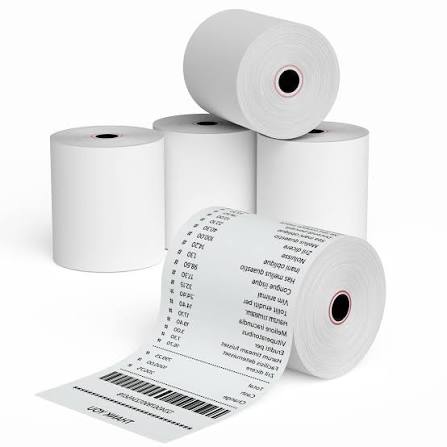
Thermal paper rolls are not one-size-fits-all, and using the wrong width is one of the most common and preventable sourcing mistakes. POS receipt printers most commonly use 57mm or 80mm wide rolls, while ATM thermal rolls and certain banking terminals often use different widths and core diameters specific to the machine manufacturer. Always confirm the exact width, roll diameter, and core size specified by your POS or ATM hardware manufacturer before ordering in bulk — a roll that is even a few millimeters off can jam repeatedly or fail to seat properly in the printer's roll holder.
- 57mm rolls — common for compact POS terminals and smaller retail counters
- 80mm rolls — standard for most retail and restaurant POS printers
- ATM-specific widths and core sizes — always verify against your machine's manufacturer specification
- Cash register rolls — check whether your register uses single-ply thermal or older two-ply carbonless paper
Thermal Coating Quality and Fade Resistance
The defining feature of thermal paper is its heat-sensitive coating, and coating quality varies meaningfully between suppliers even at the same nominal thickness. Lower-quality coatings can produce faded, patchy, or inconsistent print immediately off the printer, while a good-quality thermal coating produces clean, dark, fully legible text that holds up for weeks or months in storage — an important factor for receipts customers need to keep for returns, warranties, or expense reporting.
It is worth requesting a sample roll and running an actual print test before committing to a bulk order, then setting the printed receipt aside for a few weeks to check fade resistance under normal storage conditions (a wallet, a drawer, ambient light) rather than judging quality from the fresh printout alone. Heat and direct sunlight accelerate fading on lower-grade coatings far more than most buyers expect, so a fade test done purely indoors under office lighting can understate how a receipt will actually hold up once it leaves the store in a customer's pocket or bag.
BPA and Coating Composition
Some jurisdictions and corporate buyers increasingly prefer thermal paper manufactured without BPA (bisphenol A) in the coating formulation, given growing consumer and regulatory attention to the chemical in receipt paper globally. If this is a requirement for your business or your export market, confirm directly with your supplier what coating formulation is used rather than assuming — this is a specification worth getting in writing rather than taking on faith.
Roll Length and Changeover Frequency
Longer rolls mean fewer changeovers during a busy shift, which matters more than it might seem for high-traffic retail counters and quick-service restaurants where staff time spent swapping paper rolls is time not spent on customers. Compare roll length (typically measured in meters) across suppliers rather than assuming all rolls of the same width contain the same amount of paper — diameter and winding tightness can vary, affecting how much usable length is actually on the roll.
For businesses running multiple terminals, standardizing on roll length across all locations also simplifies inventory planning, since staff can predict exactly how many rolls a given shift or day of trading will consume without having to account for a mix of roll lengths from different past orders.
Core Size and Machine Compatibility
Core diameter — the size of the cardboard tube at the center of the roll — needs to match your printer's spindle or holder. A roll with the correct paper width but the wrong core size will not seat properly, causing feed issues or preventing the roll from being installed at all. This is especially relevant for ATM thermal rolls, where machine manufacturers often specify exact tolerances that generic rolls may not meet, and a mismatch can mean a technician visit that a correctly specified order would have avoided entirely.
Buying in Bulk: What Retail and Banking Buyers Should Ask
For any business running multiple POS terminals or ATM locations, thermal paper is a recurring, predictable, high-volume purchase — which makes it a good candidate for wholesale pricing and standing order arrangements rather than repeated small purchases from a convenience retailer. When evaluating a thermal paper rolls supplier, ask specifically about consistency across production batches, since a supplier who cannot guarantee the same coating quality and roll dimensions order after order will cause recurring operational headaches even if individual rolls test fine in isolation.
- Confirm exact width, diameter, and core size against your machine specifications before ordering in volume
- Request and test a sample roll before committing to a bulk order
- Ask about coating composition if BPA-free paper is a requirement for your business or market
- Compare roll length, not just width, since usable paper per roll can vary between suppliers
- Ask about batch-to-batch consistency for businesses running multiple terminals or locations
Storage and Handling Tips for Thermal Rolls
Thermal paper is sensitive to heat, direct sunlight, and certain chemicals (including some plastics and cleaning products) that can trigger premature darkening or fading of the coating even before the roll is used. Store rolls in a cool, dry area away from direct sunlight and heat sources, and avoid storing them near freshly printed thermal receipts or carbonless copy paper, since chemical transfer between surfaces can affect print quality on both.
For businesses in warmer regions of the Philippines, this storage consideration is especially relevant — a stockroom that gets hot during the afternoon can measurably shorten the shelf life and print quality of stored thermal rolls compared to a properly ventilated or air-conditioned storage area. Multi-location retailers should also standardize storage guidance across every branch, since a single poorly ventilated stockroom in one location can create a recurring complaint pattern that looks like a supplier quality issue but is actually a local storage problem worth correcting on-site first.
Signs It Might Be Time to Switch Suppliers
Some warning signs are worth taking seriously if you are currently sourcing thermal paper rolls from an existing supplier. Increasing complaints from cashiers or customers about faded or hard-to-read receipts, a rising frequency of paper jams that were not a problem previously, or noticeably inconsistent roll lengths within the same order are all signals that either the coating formulation or the manufacturing consistency behind your current stock has changed, even if the packaging looks identical to what you have always received.
Price alone is rarely the best reason to switch suppliers for a product like thermal paper, where the operational cost of jams, complaints, and reprints can easily outweigh a marginal per-roll savings. If you are evaluating a new supplier, treat the switch the same way you would treat a first-time purchase — request samples, run a real test across your actual terminals, and confirm specifications in writing before committing a full order.
It is also worth reviewing your own internal handling practices before assuming a quality drop is entirely the supplier's fault. Rolls stored improperly, mishandled during transport between a central warehouse and individual store locations, or left near heat sources can develop the same symptoms as a genuine coating defect, so ruling out internal storage issues first can save you the disruption of switching suppliers unnecessarily and the cost of requalifying a new vendor across every location.
Sourcing Domestically vs Importing Thermal Rolls
Retail and banking buyers sometimes assume thermal paper rolls need to be imported directly to get consistent quality, but a domestic wholesale supplier with reliable sourcing can often deliver the same or better consistency with much shorter lead times and lower per-order freight cost. This matters especially for businesses that cannot hold large amounts of working capital tied up in a big standing inventory of paper rolls and would rather order more frequently in smaller, predictable batches.
A domestic supplier who imports thermal paper stock in bulk and holds it in local warehousing effectively absorbs the long lead times and container-level logistics on your behalf, letting you place smaller, faster-turnaround orders sized to your actual location count and trading volume rather than committing to container-sized minimum orders yourself.
Thermal Paper from RC Printshoppe
RC Printshoppe supplies thermal paper rolls for POS systems, ATM machines, and cash registers, alongside receipt paper rolls for general retail use, as part of our broader office and bond paper wholesale line out of Sogod, Southern Leyte. As a receipt paper supplier serving both domestic retailers and export customers, we can help match roll specifications to your specific hardware and set up recurring bulk orders so your locations never run short during peak trading hours.
If you manage POS or ATM hardware across multiple locations and want to simplify sourcing, reach out for a wholesale quote covering your exact roll widths and volumes.