Why the Brand You Choose Affects Your Bottom Line
For a small office buying a ream or two a month, bond paper brand is almost an afterthought. For a printing shop, school, BPO, government office, or reseller ordering by the case or the pallet, it is a procurement decision with real financial consequences. The wrong brand means more paper jams, more toner smudging, more wasted sheets from dust and fiber shedding, and more complaints from staff who have to babysit the copier all day instead of getting their actual work done.
As a bond paper supplier in the Philippines that moves dozens of brands through our Sogod, Southern Leyte warehouse for both domestic wholesale and export, we get asked constantly which brand is actually worth stocking. The honest answer is that there is no single best brand for every use case — there is a best brand for your specific printer fleet, your budget per ream, and how demanding your print jobs are. A law firm printing contracts has different priorities than a school photocopying worksheets by the thousand, even though both are technically buying the same product category.
This guide breaks down the major brands by tier so you can match the paper to the job instead of guessing, and so you understand what you are actually paying for when one ream costs noticeably more than another sitting right next to it on the shelf.
What Makes a Bond Paper Brand Worth Stocking
Before comparing names, it helps to know what actually separates a good bond paper brand from a mediocre one at the mill level. These are the factors we evaluate before adding any brand to our line card, and they are the same factors a smart buyer should ask about when requesting samples from any office supplies wholesale supplier — not just take the marketing copy on the wrapper at face value.
None of these factors exist in isolation. A brand can have excellent brightness but poor moisture resistance, or low dust but inconsistent GSM from batch to batch. That is why sampling a brand on your own equipment, over a few hundred sheets rather than a handful, is worth more than any spec sheet.
- Brightness and whiteness consistency — measured in ISO brightness, this affects how sharp text and images look, especially on laser printers
- Opacity — how much show-through occurs on double-sided (duplex) printing, which matters a lot for reports and legal documents
- Dust and fiber shedding — low-dust sheets reduce printhead and drum wear over the life of office equipment
- GSM (grams per square meter) consistency from ream to ream, which affects jam rates in high-volume feeders
- Moisture content and curl resistance, especially relevant in the Philippines' humid climate
- Packaging integrity for long-distance freight, since paper absorbs moisture quickly once a ream seal is broken
Premium Tier: Brands Built for Smooth, Reliable Printing
The premium tier is where you pay a bit more per ream but generally see fewer jams, cleaner print quality, and better performance in high-speed copiers and laser printers. These brands tend to be the default recommendation for law firms, government offices, banks, and any business where document presentation matters, or where downtime from a jammed high-volume copier is expensive in staff time alone.
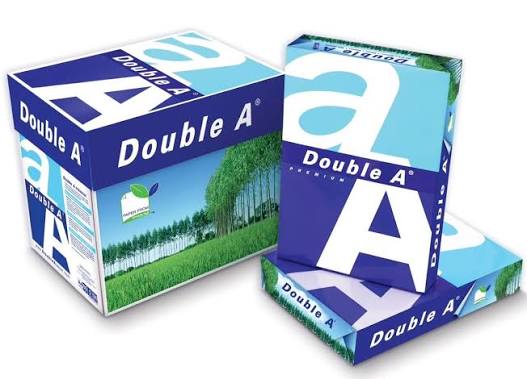
Double A
Double A, out of Thailand, has built a reputation across Southeast Asia as one of the smoothest, lowest-dust bond papers on the market. Its widely cited manufacturing process (multi-cut technology producing very uniform sheet edges) is often credited for its reputation of fewer paper jams in high-speed copiers, and its smooth finish tends to produce crisp text and clean graphics even at smaller font sizes.
It typically sits at the higher end of the price range, which is why many buyers reserve it for front-office printing, client-facing documents, and presentations rather than everyday internal use. For businesses that print a mix of internal and external documents, Double A is frequently the brand kept specifically for anything a client, regulator, or board member will actually see.
PaperOne
PaperOne, produced by Asia Pulp & Paper (APP) out of Indonesia, is one of the most widely distributed bond paper brands in the Philippines and across export markets like Papua New Guinea and Australia. It has built a strong reputation as a reliable, consistent value brand — not always priced quite as high as Double A, but generally regarded as delivering comparable smoothness and brightness for everyday office and school use.
Its wide availability also makes it easier to source in volume without long lead times, which matters for buyers who cannot afford stockouts during a busy season. For many schools, BPOs, and government offices running very high print volumes, PaperOne's combination of dependable quality and broad availability makes it the practical default rather than a compromise.
Xerox Vitality Multipurpose Printer Paper
Xerox's Vitality Multipurpose line carries the trust of a legacy printing and imaging brand name, and it is a frequent choice for offices standardizing on a single paper across inkjet and laser equipment. It is positioned as an all-purpose sheet — usable for everything from internal memos to client proposals — which makes it a practical single-SKU choice for smaller offices that do not want to stock multiple bond paper grades or manage separate reorder points for different departments.
Navigator and Reflex Ultra White
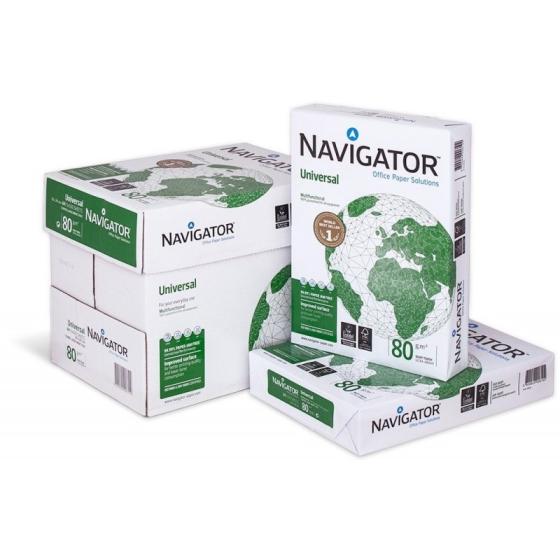
Navigator, a European-origin brand, and Reflex Ultra White both trade on high whiteness ratings that make them popular for design studios, marketing agencies, and anyone printing photos or color graphics where paper brightness affects color accuracy. These brands tend to command a premium similar to Double A and are worth sampling if your business regularly prints presentations, portfolios, or marketing collateral rather than routine paperwork, since the difference in perceived color quality on brighter paper stock can be noticeable to clients.
Solid Mid-Range Choices for High-Volume Offices
Between premium and budget sits a large field of mid-range brands that deliver dependable everyday performance at a lower cost per ream — the sweet spot for BPOs, schools, and government offices printing large volumes where every peso per ream adds up across thousands of reams a year. These brands rarely make headlines the way Double A or PaperOne do, but they are quietly responsible for a huge share of everyday printing across the Philippines.
Most mid-range brands perform well enough on standard laser and inkjet printers that staff genuinely cannot tell the difference from a premium sheet in routine, text-heavy use — the gap tends to show up mainly in high-resolution color printing or very high-speed copier runs, where premium brands still hold a slight edge.
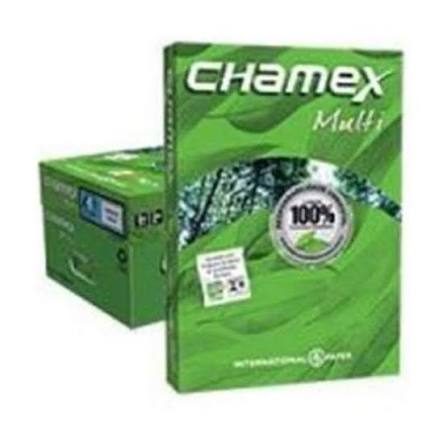
- Chamex — a Brazilian-origin brand with a long track record in export markets, known for consistent mid-range performance
- Typek — widely used across Africa and increasingly available in Philippine wholesale channels, a dependable everyday sheet
- SvetoCopy — an accessible, no-frills option popular for high-volume photocopying
- Roco and Mondi Rotatrim — European-linked brands offering solid mid-tier consistency for offices standardizing on one supplier
- Canon and HP branded copy paper — trusted names for buyers who prefer to match paper branding to their printer hardware
- Brilliant Laser and Copimax — value-focused options built for laser printer environments
Budget and Local Options: Hard Copy Bond Paper
For businesses printing enormous volumes of internal documents — drafts, worksheets, receipts for filing, internal memos — where presentation quality is not the priority, hard copy bond paper and other local or budget-tier brands like Hi Plus, IK Plus, JK, Paperline, Paperline Gold, PP Lite, Smart, Zap, and Smartist offer meaningful cost savings per ream. The tradeoff is generally a bit more variability in brightness and slightly higher dust levels compared to premium brands, so these are best matched to laser or inkjet printers used for routine, high-volume, lower-visibility printing rather than client-facing documents.
Many schools and back-office operations run a two-tier system: a premium or mid-range brand for anything that leaves the building, and a budget hard copy bond paper for everything printed and filed internally. This approach can cut overall paper spend significantly without sacrificing quality where it actually matters, and it is one of the simplest cost-control changes a procurement team can make without touching any other line item in the budget.
It is worth noting that budget does not have to mean unreliable. Many of the local and value brands we carry perform consistently well within their intended use case — the key is being honest about matching the brand to the job rather than assuming the cheapest option will underperform everywhere, or assuming a premium brand is required for paperwork nobody outside the building will ever see.
Matching GSM to the Job: 70, 75, 80, and 100 GSM
GSM (grams per square meter) is the other half of the buying decision, independent of brand. Heavier paper feels more substantial and resists show-through, but it also costs more and can slow down high-speed feeders if a machine is not calibrated for it. Getting GSM right for each use case is often a bigger cost lever than brand choice alone.
- 70 GSM — the lightest common grade, economical for high-volume internal printing and drafts where cost per ream matters most
- 75 GSM — the most common all-purpose grade across the Philippines, a safe default for offices and schools
- 80 GSM — a step up in weight and opacity, preferred for double-sided printing, contracts, and documents that need to feel more substantial
- 100 GSM — a premium weight used for cover pages, certificates, presentations, and documents meant to stand out
Common Mistakes Buyers Make When Choosing a Brand
The most common mistake we see is standardizing on a single premium brand for everything a business prints, which inflates paper spend without any real benefit for internal, disposable documents. The opposite mistake — buying only the cheapest available bond paper across the board — can backfire just as badly, showing up as more service calls for jammed printers and dissatisfied clients who receive a dull, thin-feeling proposal.
A second common mistake is not testing a new brand before switching over an entire order. Printer and copier models vary enough in their feed mechanisms and toner fusing that a brand performing beautifully on one machine can jam repeatedly on another. Always request a sample ream and run it through your actual equipment before committing to a bulk switch.
How RC Printshoppe Selects the Brands We Carry
As a DTI-registered wholesaler and exporter based in Sogod, Southern Leyte, we carry more than 25 bond paper brands specifically because no single brand fits every customer. A printing press in Cebu, a school district buying for the new school year, and an export buyer in Papua New Guinea all have different priorities around cost, brightness, and packaging durability. We source across all three tiers — premium, mid-range, and budget hard copy bond paper — in 70, 75, 80, and 100 GSM, so returning customers can standardize on a mix that fits their actual printing mix rather than settling for whatever a single-brand supplier happens to stock.
Ready to Compare Brands for Your Next Bulk Order?
If you are weighing Double A against PaperOne, wondering whether a mid-range brand can handle your print volume, or simply looking for the most cost-effective hard copy bond paper for a school year's worth of printing, our team can help you match brand and GSM to your actual usage. Reach out for a wholesale quote and we will walk you through options across our full bond paper line, whether you are ordering a pallet for a domestic office or a container load for export.