How Thermal Paper Works, in Brief
Thermal paper is coated with a heat-sensitive layer that darkens when it passes under a printer's heated print head, which is why thermal receipt printers have no ink cartridge or ribbon. This is what makes thermal printing fast, quiet, and low-maintenance compared to impact or inkjet printing, and it is the reason thermal rolls dominate point-of-sale systems, ATMs, cash registers, and receipt printers across retail, banking, and food service.
Because the image is created by heat rather than ink, thermal paper quality varies more than most buyers expect. Coating quality affects print darkness, print speed tolerance, and how long a printed receipt stays legible before the image fades, which matters for receipts used as return proof or expense documentation months later.
POS Thermal Rolls: Built for Retail and Food Service
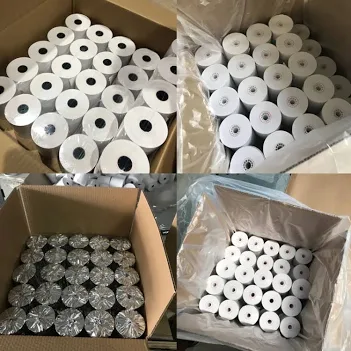
POS, or point-of-sale, thermal rolls are used in the receipt printers found at retail counters, restaurants, and service businesses. They are typically produced in standard widths, most commonly 57mm and 80mm in the Philippines and much of Asia, with roll diameter and core size varying by printer model. Getting the width wrong is the most common ordering mistake; a roll that is even a few millimeters off the printer's specified width either will not fit the paper holder or will feed unevenly, causing print misalignment or jams.
Businesses running multiple POS terminals across different brands or models should confirm the exact roll specification, width, diameter, and core size, for each machine before placing a bulk order, since not every terminal in a multi-location business necessarily takes the same roll size, especially if equipment was purchased at different times from different vendors.
ATM Thermal Rolls: Built for Banking Infrastructure
ATM thermal rolls serve a narrower, more standardized purpose than POS rolls, printing withdrawal slips and transaction receipts inside automated teller machines. ATM rolls are generally produced to tighter specification tolerances than general POS rolls, since ATM printer mechanisms are often more sensitive to roll diameter and paper thickness consistency, and a roll that jams inside an ATM is a more costly service disruption than a jam at a retail counter, since it can take the entire machine offline until a technician clears it.
Banks, ATM deployers, and businesses operating their own ATM units typically source rolls that match the specific printer model installed in their machines, and because ATM uptime is a priority, many buyers in this category place recurring bulk orders specifically to avoid running low during periods when a technician visit for restocking is not immediately available.
Core Size and Roll Diameter Explained
Beyond width, two other measurements determine whether a thermal roll physically fits a given printer: core size, the diameter of the cardboard or plastic tube the paper is wound around, and roll diameter, the overall size of the finished roll before it is loaded. A roll with the correct width but the wrong core size may not seat properly on the printer's spindle, and a roll with too large a diameter may not fit inside the printer's paper compartment at all, even if width and core are both correct.
For businesses setting up new POS terminals or ATM units for the first time, checking the printer manufacturer's specification sheet for all three measurements, width, core size, and maximum roll diameter, before placing a first bulk order avoids the common frustration of receiving a large shipment of rolls that turn out not to fit the installed equipment.
Choosing the Right Roll for a New POS or ATM Deployment
Businesses setting up new retail locations or deploying additional ATM units for the first time should treat roll specification as part of the initial equipment planning, not an afterthought handled after the hardware is already installed. Confirming roll specifications with the printer or ATM manufacturer, or with the equipment vendor, before finalizing a supply order ensures the first bulk shipment is usable from day one rather than requiring a rushed reorder once a mismatch is discovered.
For businesses standardizing equipment across multiple new locations, choosing printer or ATM models that share a common roll specification, where operationally possible, simplifies procurement considerably going forward, since it allows one wholesale order to serve every site rather than requiring the purchasing team to track several different roll specifications across a growing network.
Cash Register Rolls and General Receipt Paper
Cash register rolls, used in traditional non-thermal mechanical registers as well as some thermal register models, and general receipt paper rolls used across small retail and service counters, round out the broader thermal and receipt paper category. These typically follow similar width standards to POS rolls but should still be confirmed against the specific register or printer model in use, particularly for older mechanical registers that may use a different paper type entirely rather than thermal stock.
Key Differences at a Glance
While POS and ATM thermal rolls share the same underlying thermal-coating technology, the practical differences that matter for a bulk buyer come down to specification tolerance, roll size standardization, and the cost of a jam or outage in each context.
- POS rolls: common widths 57mm and 80mm, moderate tolerance for minor variation, used in retail and food service receipt printers
- ATM rolls: tighter manufacturing tolerance, matched closely to specific ATM printer models, jam has higher operational cost
- Cash register rolls: similar widths to POS rolls but should be confirmed against register type, especially for older mechanical models
- General receipt paper: broad category covering small counter printers and handheld terminals, width and core size vary by device
BPA Considerations
Some thermal paper coatings historically used BPA, or bisphenol A, as a color-developing agent, and this has become a point of interest for businesses with environmental or health-conscious procurement policies, particularly in markets like Australia, Canada, and the EU where regulatory attention on BPA has been more prominent. Buyers with specific BPA-related requirements should ask their supplier directly about the coating formulation of the specific roll being purchased rather than assuming any particular brand or product line meets a given standard, since formulations vary by manufacturer and product line.
Thermal Paper Quality and Print Head Wear
Not all thermal paper is created equal, and the coating quality of a roll affects more than just how dark or clear the printed text looks. Lower-quality thermal coatings can leave more residue on a printer's thermal print head over time, which contributes to premature print head wear, a genuine cost concern for businesses running high receipt volumes, since a thermal print head is one of the more expensive components in a POS or ATM printer to replace.
Buyers focused purely on the lowest price per roll sometimes end up paying more over time through increased printer maintenance and more frequent print head replacement. For high-volume environments, retail chains printing thousands of receipts daily, or ATM networks running continuously, choosing a well-manufactured roll from a consistent source is generally a better long-term economic decision than chasing the cheapest roll available on a given order.
Retail Chains, Banks, and Bulk Buying Patterns
Businesses that consume thermal rolls at real scale, multi-branch retail chains, restaurant groups, banks, and payment processors, tend to buy differently than a single small shop. Rather than reordering reactively when stock runs low at one location, larger operations typically centralize thermal roll purchasing, negotiate standing wholesale pricing for a defined annual volume, and distribute stock to individual branches or ATM sites from a central warehouse, which smooths out both pricing and availability across the whole network.
This centralized approach also makes it easier to standardize on a single roll specification across locations where possible, reducing the number of different width and diameter combinations a purchasing team has to track. For businesses still buying thermal rolls location by location, consolidating that purchasing under one wholesale account is often one of the simpler operational changes available to reduce both cost and the administrative burden of tracking multiple small orders.
Storage and Shelf Life
Thermal paper is more sensitive to heat, light, and humidity than standard bond paper, since the same heat-reactive coating that enables printing can also darken or fade prematurely if the roll is stored improperly. Rolls stored in direct sunlight, near heat sources, or in high-humidity stockrooms can lose print clarity or develop faded, illegible receipts well before the roll is used up, which matters for receipts kept as transaction records.
For businesses buying thermal rolls in bulk, storing stock in a cool, dry, dark area, and rotating older rolls into use before newer stock, extends usable shelf life meaningfully and avoids the frustration of pulling a roll from storage only to find it already degraded.
Ordering the Right Mix Across a Mixed Equipment Fleet
Many established retailers and banks operate a mixed fleet of POS terminals or ATM units accumulated over several years and several equipment purchases, which often means more than one roll specification is genuinely in use across the business at the same time. Rather than assuming a single roll type covers every device, it is worth doing a quick physical audit, checking the roll currently loaded in each machine, before placing a large consolidated wholesale order, so the order accurately reflects what the business actually needs by location and machine type.
A supplier that can fulfill a single order containing more than one roll specification, clearly labeled and packed separately by type, saves a multi-location business from having to place several smaller orders with several different suppliers just to cover a handful of different machine models.
Buying Thermal Paper Rolls Wholesale
Businesses running multiple POS terminals, ATM units, or high-volume receipt printers typically move to bulk thermal roll purchasing once monthly usage passes a certain threshold, since per-roll pricing improves meaningfully at box and carton quantities. A thermal paper rolls supplier that can confirm exact width, diameter, and core specifications before shipping, rather than shipping a generic roll and hoping it fits, saves a buyer from receiving stock that does not work with their equipment.
RC Printshoppe and General Merchandise supplies POS thermal rolls, ATM thermal rolls, cash register rolls, and general receipt paper rolls on a wholesale basis to retailers, banks, and businesses across the Philippines. Buyers with specific printer or ATM models are welcome to reach out with their required specifications to request an accurate wholesale quote.